
Ginger & Turmeric Tea
Soothing Ginger & Turmeric Tea
10 minutes
Total time
2 cups
Serves
Warming
TCM nature
Autumn & Winter
Best season
The Traditional Chinese Medicine Perspective
In traditional Chinese dietary theory, foods and drinks are described by qualities such as warming, cooling and neutral. These categories were developed over centuries as a practical way to match everyday eating to the seasons — warming preparations in cold weather, lighter cooling ones in summer. They are traditional descriptive categories, not claims about physiological effects.
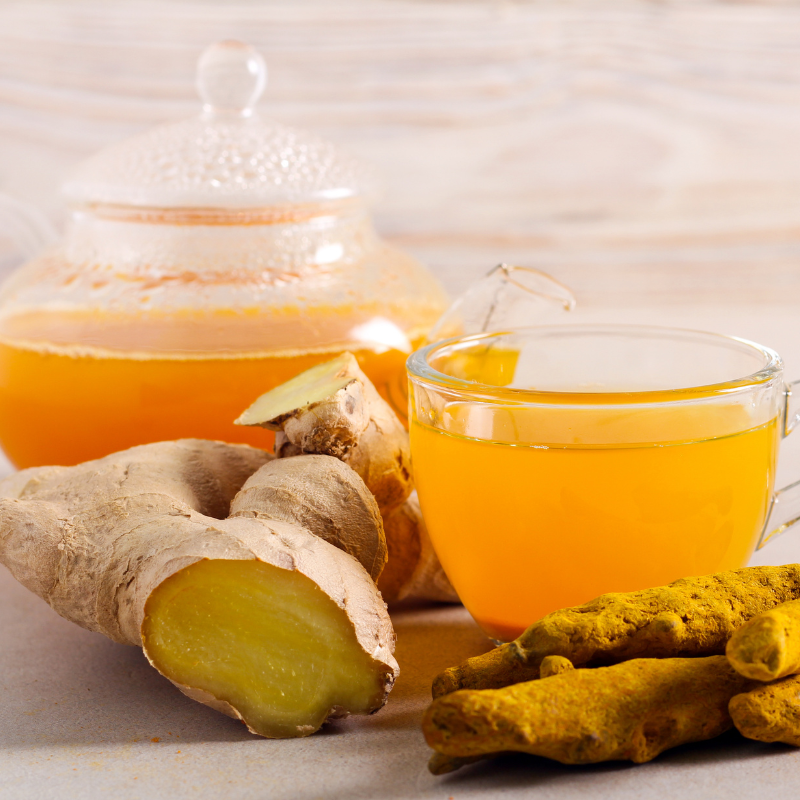
Fresh ginger (sheng jiang) is one of the most common kitchen ingredients in Chinese home cooking and is classically described as warming and aromatic. Turmeric (jiang huang) has a long history of culinary use across Asia and is similarly described as warming in traditional dietary texts.
Combined as a simple tea, the two make a comforting hot drink for cool mornings and evenings. It is everyday kitchen cooking — the kind of ordinary dietary habit that Chinese food tradition emphasises — rather than a treatment or remedy.
Ingredient Notes
Fresh ginger
Described as warming and aromatic in classical Chinese dietary texts. Fresh root gives a brighter flavour than dried powder; leave the skin on if it is young and thin.
Turmeric
Used as a culinary spice across Asia for centuries. Fresh root or good-quality powder both work; fresh gives a more delicate flavour, powder a deeper colour.
Lemon
Added off the heat for brightness. In traditional terms, sour flavours are described as gathering and astringent — here it simply balances the warmth of the roots.
Honey (optional)
A traditional sweetener for teas. Add once the tea has cooled slightly — very hot liquid dulls its flavour.
👨🍳 The Recipe
🍴Ingredients
- 4–5 thin slices of fresh ginger root (about a thumb-sized piece)
- 2–3 thin slices of fresh turmeric root, or ½ teaspoon ground turmeric
- 500 ml water
- Juice of half a lemon
- 1–2 teaspoons honey, to taste (optional)
- A small pinch of black pepper (optional, traditional pairing with turmeric)
Method
- 1 Simmer the roots
Add the ginger and turmeric slices to a small saucepan with the water. Bring to a gentle boil, then reduce to a low simmer for 5–7 minutes. A longer simmer gives a stronger, spicier tea.
- 2 Strain
Pour through a fine strainer into cups or a teapot, discarding the root slices.
- 3 Finish off the heat
Let the tea cool for a minute, then stir in the lemon juice and honey. Add a small pinch of black pepper if using.
- 4 Serve warm
Enjoy warm rather than piping hot. The sliced roots can be simmered a second time for a milder second pot.
- Make a larger batch and keep it in the fridge for up to two days — reheat gently rather than boiling again.
- Add a cinnamon stick or a few cardamom pods during the simmer for a spiced variation.
- For a stronger brew, grate the roots instead of slicing them.
- Fresh turmeric stains easily — use a chopping board you don’t mind colouring.
Frequently Asked Questions
Is ginger and turmeric tea a treatment for any health condition?
What does 'warming' mean in Chinese dietary theory?
Warming, cooling and neutral are traditional descriptive categories used in Chinese dietary texts to guide seasonal cooking. They are not measurements of temperature and are not claims about physiological effects.
Can I drink it every day?
As an ordinary food, most people can enjoy this tea as part of a normal varied diet. If you have specific dietary questions — particularly if pregnant, breastfeeding or taking medication — speak with your GP, dietitian or treating practitioner.
Fresh or powdered turmeric — which is better?
Both work well. Fresh turmeric gives a lighter, more aromatic flavour, while ground turmeric is convenient and produces a deeper golden colour. Use whichever you have on hand.
⚠️ This recipe is shared as general information drawn from Chinese dietary tradition. It is everyday food, not a treatment for any health condition, and it is not a substitute for advice from your GP, dietitian or other registered health professional. If you are pregnant, managing a diagnosed condition, or taking prescribed medication, speak with your treating practitioner before making dietary changes.
Continue Exploring
More TCM Recipies
Browse the full seasonal recipe collection.
Traditional Chinese Medicine
An integrated, whole-person approach to your health and wellbeing
Chinese Herbal Medicine
Individualised herbal formulas prescribed alongside your treatments.
Acupuncture
Precise, personalised acupuncture as part of your TCM treatment plan.
Find Us
Visit our Traditional Chinese Medicine clinic in Georgetown, Newcastle
Mayfield, Waratah, Hamilton, Lambton, Jesmond, New Lambton and the wider Hunter region.

On Point Natural Medicine
Acupuncture Clinic
Address: 57 Georgetown Rd, Georgetown NSW 2298
Phone: 0494 325 886
Website: onpointnaturalmedicine.com.au
Opening Hours
- Monday: 8:00 am – 4:00 pm
- Tuesday: 9:30 am – 7:00 pm
- Wednesday: Closed
- Thursday: 9:30 am – 7:00 pm
- Friday: 8:30 am – 4:00 pm
- Saturday: Closed
- Sunday: Closed
-
*Hours may differ on public holidays.
Curious About Dietary Guidance?
Dietary advice tailored to your circumstances is discussed during a consultation. Book online or call the clinic to arrange a time.